

Environmental acetylcholinesterase blockade impairs conserved gut-metabolic resilience in a soil nematode sentinel
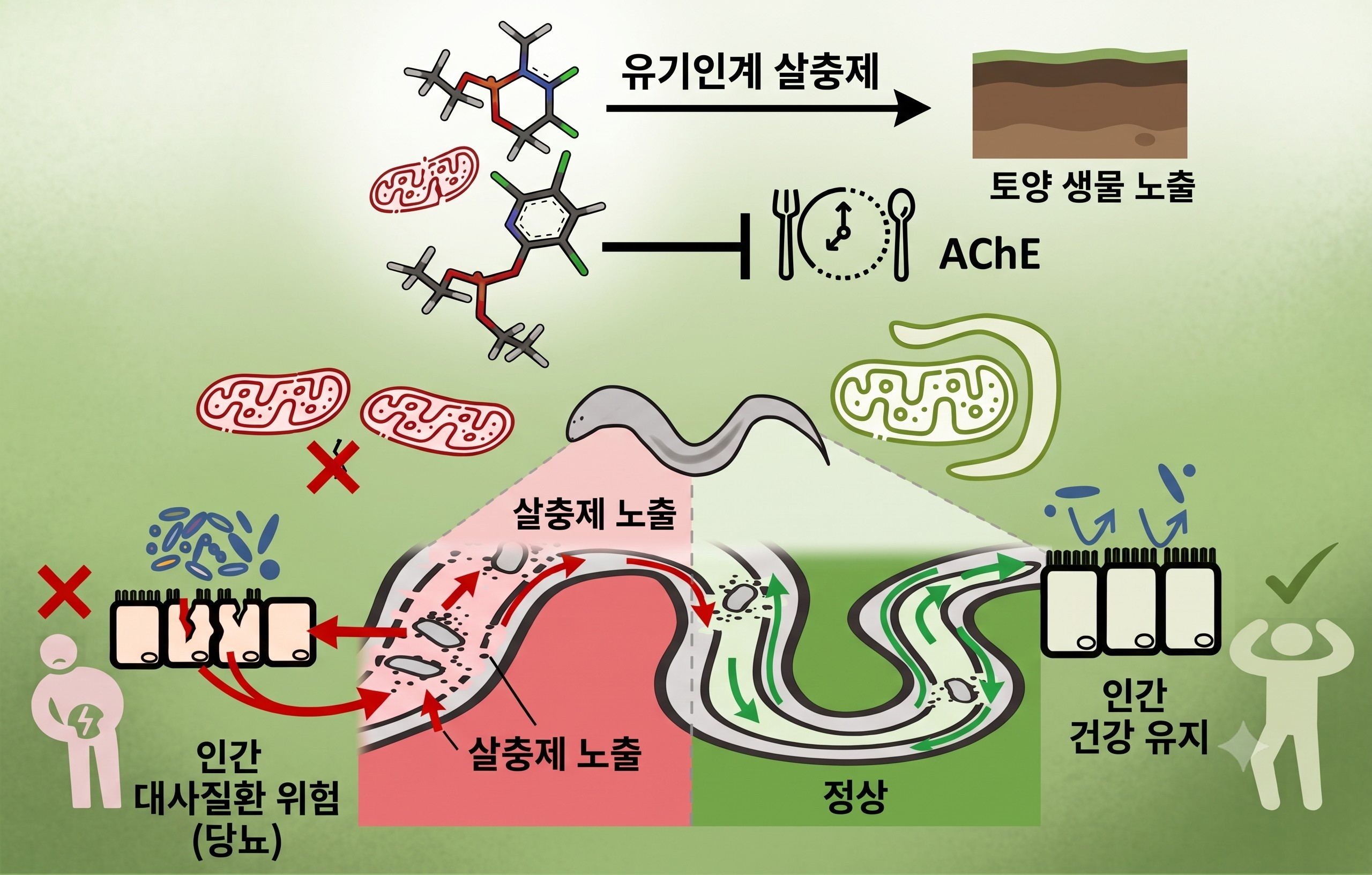
Organophosphorus insecticides, such as chlorpyrifos (CPF), are pervasive environmental hazards that threaten ecosystem stability and are increasingly linked to human metabolic syndromes. This study investigates how pesticide exposure disrupts homeostatic adaptation in soil ecosystems and its translational relevance to mammalian physiology. Using the soil nematode Caenorhabditis elegans as a sentinel model, we demonstrate that CPF exposure triggers systemic metabolic compromise by disrupting a novel acetylcholinesterase (AChE)–autophagy axis. While dietary restriction (DR) normally activates protective autophagy to preserve mitochondrial and intestinal barrier integrity, the AChE blockade by CPF effectively abrogates these innate adaptive responses. Notably, transcriptomic profiling reveals that the metabolic collapse resulting from AChE inhibition in nematodes is highly correlated with human gastrointestinal and metabolic disease signatures. By identifying ACE-2 as a key gatekeeper for resilience, our study demonstrates that organophosphates do not merely cause toxicity but actively dismantle the organismal capacity to adapt to environmental and metabolic challenges.
- Author (Pusan National University): Yuseok Moon (Laboratory of Food Systems Analytics & Department of Convergence Medical Sciences and Biomedical Research Institute)
- Title of original paper: Environmental acetylcholinesterase blockade impairs conserved gut-metabolic resilience in a soil nematode sentinel
- Journal: Environment International
- Web link: https://doi.org/10.1016/j.envint.2026.110485
- Contact e-mail: moon@pnu.edu
 260914-337-(첨부) 부산대 문유석 교수팀 연구 이미지.jpg
(547KB)
260914-337-(첨부) 부산대 문유석 교수팀 연구 이미지.jpg
(547KB)